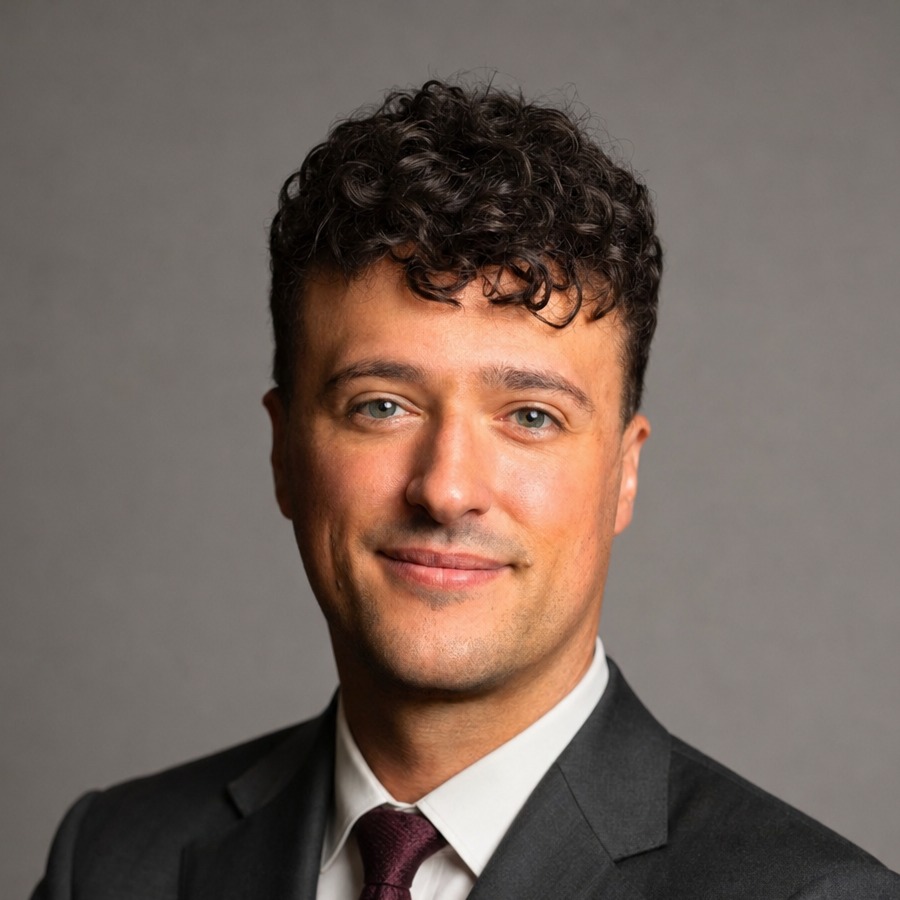
I am a law professor and registered patent attorney who uses AI to find out how the law actually works. I build datasets from thousands of real decisions, fine‑tune my own models, and publish what I find along with how accurate it is. I bring that work to law firms and legal departments that want AI in their practice and need to know it will hold up.
Each talk is tailored to the audience’s practice areas, tools, and risk profile.
Flagship
What AI Reveals About How the Law Actually Works
Trademark lawyers learn that thirteen factors decide likelihood of confusion. I used large language models to code roughly 4,000 decisions of the Trademark Trial and Appeal Board and found that two of those factors predict the outcome more than 99% of the time. I checked the model’s coding against my own hand review of 1,002 factor-level findings; the two agreed 97.11% of the time (one reviewer, not blind to the model’s coding). This talk walks through how the study was built, how its accuracy was measured, and what it means for any practice that advises clients or prices risk on a multifactor test. The study is published as “Doctrine, Data, and the Death of DuPont” (opens in new tab), 36 Fordham Intell. Prop. Media & Ent. L.J. 678 (2026).
Best for
Firm-wide meetings, in-house legal teams, and conference keynotes.
Earlier versions
“Multifactor Mythology,” CLE for the Jackson County Bar Association and SIU Simmons Law School; “Rethinking Likelihood of Confusion,” Kansas City IP Symposium (Apr. 2026). The underlying research was presented at Stanford, Northwestern, SEALS, and Loyola Chicago; next at the Midwest IP Institute (Sept. 25, 2026).
Your audience leaves with
A concrete picture of what AI can find in legal data that people miss
A way to separate the factors that decide cases from the ones that fill briefs
Questions to ask before trusting any AI-generated legal analysis
Ethics CLE
Building Legal AI You Can Defend
Lawyers keep getting sanctioned for citing cases that do not exist. The cause is a workflow problem, and it has known fixes. This talk explains why language models fabricate, then lays out a four-part structure drawn from the methods in my own research: closed sets of sources, accuracy measured before anything is trusted, verification that leaves a record, and a named lawyer who signs off. Each step is tied to duties ABA Formal Opinion 512 discusses, including competence, confidentiality, candor to the tribunal, and supervision.
Best for
CLE programs, ethics and professional responsibility hours, and risk or knowledge-management teams.
Your audience leaves with
A plain explanation of where hallucinations come from
A four-part structure for AI work product that can be audited
A checklist to apply to their own tools the next morning
Leadership
From Pilot to Practice: Adopting AI in a Legal Organization
A pilot that impresses in a demo still has to earn a place in daily work. This session is for the people who decide what happens next: which work to hand to AI first, how to tell whether it is working, who reviews what, and what the change means for staffing, training, and pricing.
Best for
Firm leadership, practice group chairs, general counsel, and legal operations.
Your audience leaves with
A way to rank use cases by value and risk
Measures that show whether a deployment is paying off
A governance model sized to the organization
About ~4,000TTAB decisions coded with AI
99.55%Of 4,651 mark comparisons decided the way two DuPont factors pointed
97.4%Fair Use Database outcome agreement with 453 human‑coded analyses
In person or virtual. Every format includes a planning call so the material fits your group.
Keynote
30 to 60 minutes
For conferences, retreats, and firm-wide meetings.
CLE Program
60 minutes
Written to CLE standards, with materials and a timed agenda for the host’s accreditation filing. Ethics credit where the jurisdiction allows.
Workshop
Half day
Hands-on work with your team’s own tools and workflows.
Leadership Briefing
60 to 90 minutes
A closed-door session for partners or a legal department’s leadership team.
Based in Carbondale, Illinois. Fees depend on format and travel; ask for a quote.
Venues
Where I Speak
Bar and CLE programs, scholarly conferences, and invited talks.
Bar and CLE Programs
SIU Simmons Law SchoolVirtual CLE, Apr. 2026: “Multifactor Mythology”
Kansas City IP SymposiumLawyers Association of Kansas City, Apr. 2026: “Rethinking Likelihood of Confusion”
Jackson County Bar AssociationCLE, Apr. 2026: “Multifactor Mythology”
Scholarly Conferences and Workshops
Intellectual Property Scholars ConferenceStanford Law School, Aug. 2026: “Factors and Fictions”
Southeastern Association of Law SchoolsNew Scholars Program, July 2026: “Factors and Fictions”
Chicagoland Summer IP WorkshopNorthwestern Pritzker School of Law, June 2026: “Factors and Fictions”
Chicagoland Junior Scholars ConferenceLoyola University Chicago School of Law, Sept. 2025: “Doctrine, Data, and the Death of DuPont”
Other Invited Talks
SIU MEDPREPJuly 2025: “Ethical Use of AI Services as Medical Students”
Upcoming
Midwest IP InstituteMinnesota CLE, Minneapolis, Sept. 25, 2026: panelist, “DuPont’s Abrupt AI Obituary: Are There Only Two Likelihood of Confusion Factors Left to Balance?”
SIU Scholars in ConversationSept. 30, 2026: “The Missing Jury: Who Decides Trademark Confusion?”
Speaker Kit
For Event Organizers
Two bios, a host introduction, and a headshot, ready for your program materials.
Short Bio
Thomas Reichert is an Assistant Professor of Law at Southern Illinois University Simmons Law School, a registered patent attorney, and the founder of MarkSense Analytics. Using large language models to study how courts and agencies decide cases, Reichert analyzed roughly 4,000 Trademark Trial and Appeal Board decisions and found that two of the thirteen DuPont factors predict outcomes more than 99% of the time. Reichert speaks on AI workflows that legal teams can measure and defend.
Full Bio
Thomas Reichert is an Assistant Professor of Law at Southern Illinois University Simmons Law School and the founder of MarkSense Analytics. Reichert uses large language models to study how courts and agencies decide cases, and built The Fair Use Database (opens in new tab), whose research assistant answers only from coded court opinions and cites its evidence. The database’s outcome coding agrees with 453 human-coded analyses 97.4% of the time. Reichert’s study of roughly 4,000 Trademark Trial and Appeal Board decisions, published in the Fordham Intellectual Property, Media & Entertainment Law Journal, found that two of the thirteen DuPont factors predict outcomes more than 99% of the time. The study was covered by MLex, World Trademark Review, and The Fashion Law and was cited in a petition for certiorari to the U.S. Supreme Court. Reichert filed an amicus brief in RiseandShine Corp. v. PepsiCo, Inc., a trademark case now before the U.S. Supreme Court. A registered patent attorney with degrees in law, business, and engineering, Reichert practiced IP law at Kutak Rock and Bookoff McAndrews. Reichert chairs the law school’s Ad Hoc AI Committee, has consulted with legal service providers on AI and analytics, and speaks on AI workflows that legal teams can measure and defend.
Introduction for the Host
Our speaker is Thomas Reichert, an Assistant Professor of Law at SIU Simmons Law School and a registered patent attorney who practiced IP law at Kutak Rock. Using large language models, Professor Reichert coded about 4,000 trademark decisions and found that two of the thirteen DuPont factors predict the outcome more than 99% of the time, a study later cited in a petition to the U.S. Supreme Court. Today’s talk draws on that research to show how legal teams can use AI in work they can measure and defend. Please welcome Professor Reichert.